
Compressed air and nitrogen for the electronics industry
Semiconductor cleanroom.
The electronics and semiconductor industry imposes the most extreme purity requirements on the market. Wafer handling, anti-static blowing, inert chambers for etching or packaging require air and nitrogen completely free of particles (ISO 14644 class 5 to 7) with extremely low dew point.
What needs to be solved.
- 01Achieve particle purity below 0.01 µm on compressed air and technical nitrogen, in compliance with SEMI F and ISO 8573-1 class 0.
- 02Guarantee total system availability - an unplanned shutdown on an etching line can cost several hundred thousand euros per hour.
- 03Generate on-site nitrogen at 99.999 % purity with a total cost of ownership lower than bottle or bulk delivery.
Our technical answer.
Electronics needs two clean fluids in the same place: air and nitrogen. The families below cover both.
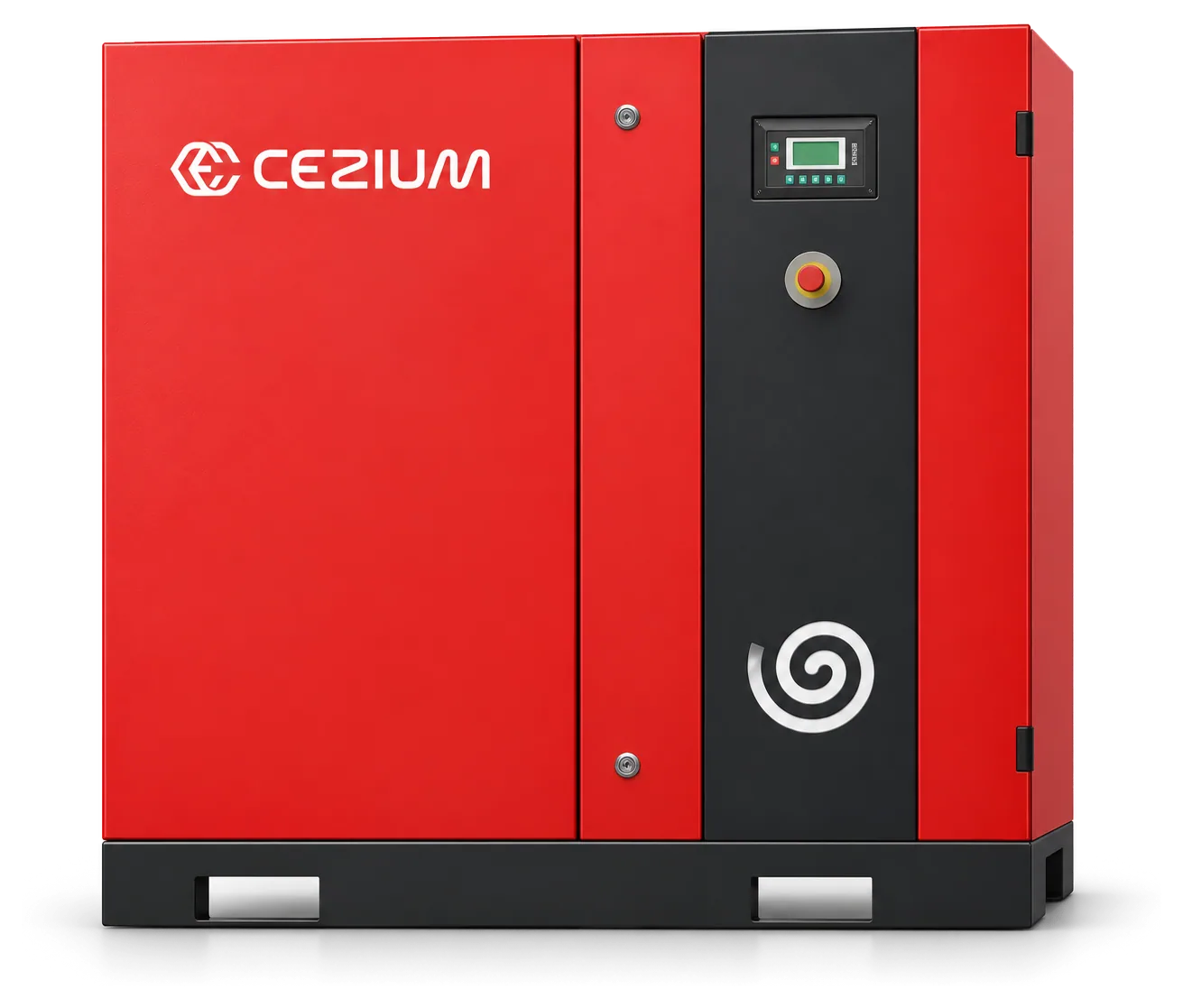
Oil-free scroll
2.2 to 45 kWOil-free by design and quiet: it installs near the workstations, with no dedicated plant room.
13 catalogue models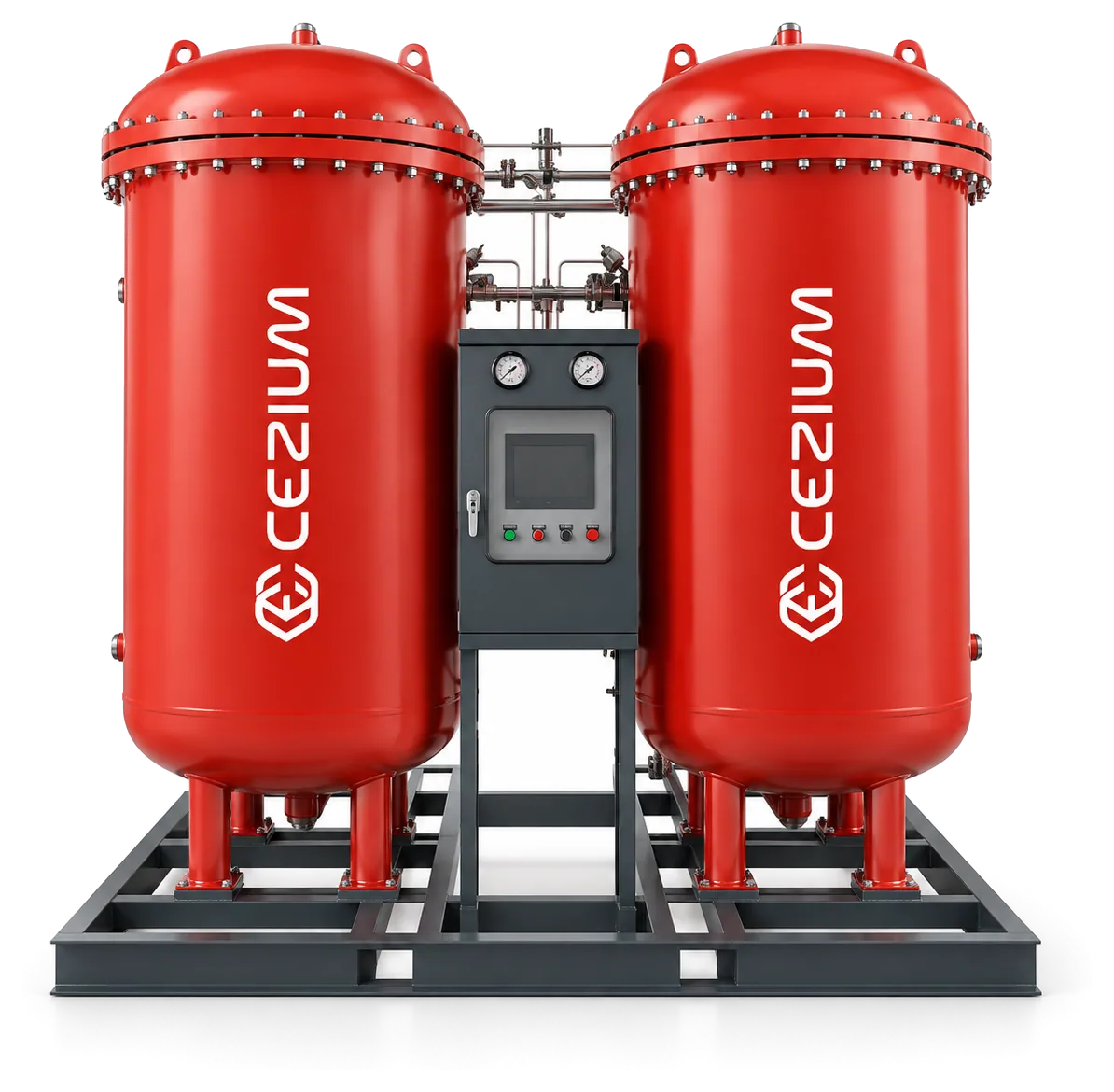
Nitrogen produced on site at the purity actually needed, instead of delivered, stored and handled in cylinders.
67 catalogue models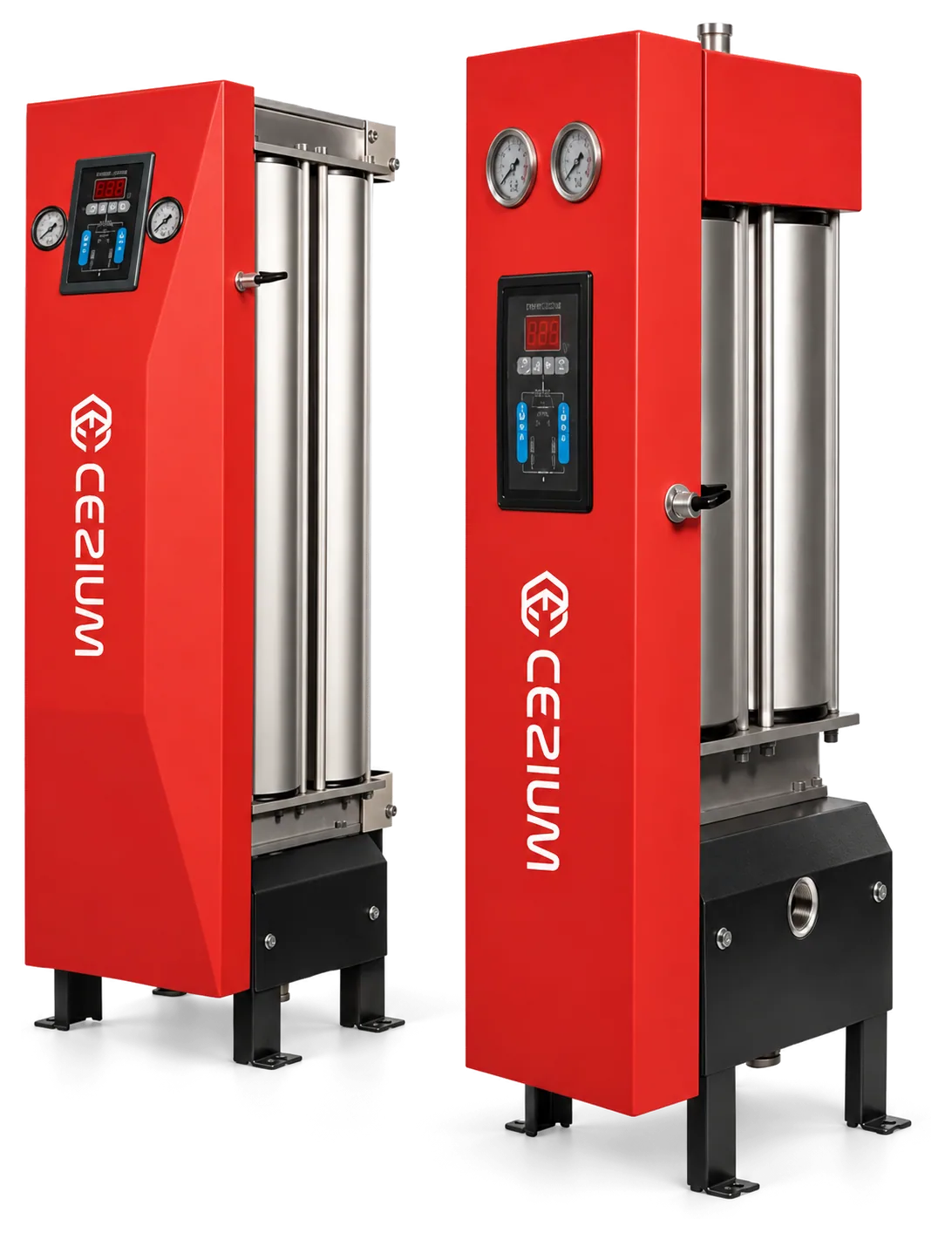
Heatless adsorption dryer
0.5 to 83 m³/minThe low dew point required by anti-static blowing and inert atmospheres.
31 catalogue modelsApplicable standards.
Compliances are verified case by case according to the selected model and audit scope. Complete documentation provided with each machine.
The classes usually required
Electronics is the most demanding sector on all three contaminants at once. These values are indicative: your etching or packaging process sets the target.
| Point of use | Particles | Water (dew point) | Oil |
|---|---|---|---|
| Cleanroom, wafer handling, etching | Classe 1 | -70 °C (classe 1) | Classe 0 |
| Anti-static blowing and packaging | Classe 1 | -40 °C (classe 2) | Classe 0 |
| Service air and utilities | Classe 2 | +3 °C (classe 4) | Classe 1 |
Our order of preference for Class 0
When a specification says Class 0, CEZIUM quotes an oil-free machine, as the trade understands it: scroll compressor up to 5 m³/min, rotary tooth compressor from 2.3 to 8.6 m³/min, dry screw or centrifugal beyond that. We also point out the alternative few suppliers mention: a lubricated screw followed by a treatment chain delivers oil-free air for a markedly lower purchase price, without carrying the Class 0 label.
In this trade, Class 0 means an oil-free machine. That is the convention, and it is what a specification expects when it writes Class 0, so that is what we quote. Technically, ISO 8573-1 classifies air at the point of use rather than the compressor, so a lubricated screw followed by multi-stage filtration and an adsorption dryer delivers oil-free air measured on acceptance. That is a genuine alternative, cheaper to buy and far better at heat recovery, but it does not give you a Class 0 certified machine. Both are worth knowing; your own documents decide.
| Rank | Technology | Catalogue flow | Power | Class 0 | Recoverable heat | Purchase cost |
|---|---|---|---|---|---|---|
| 01 | Scroll compressor | 0.3 to 4.96 m³/min | 2.2 to 45 kW | Oil-free machine | Low | Moderate |
| 02 | Rotary tooth compressor | 2.3 to 8.6 m³/min | 15 to 55 kW | Oil-free machine | Low | High |
| 03 | Dry screw compressor | 6.8 to 43 m³/min | 45 to 250 kW | Oil-free machine | Limited | Very high |
| 04 | Centrifugal compressor | 48 to 3,000 m³/min | 198 to 12,055 kW | Oil-free machine | High | Very high |
| 05 | Lubricated screw + treatment chain | 0.95 to 44 m³/min | 5.5 to 250 kW | Treated air, no label | High | Low |
Flow rates and power ratings taken from the CEZIUM catalogue, oil-free technologies and variable-speed lubricated screw. Purchase cost is given in relative ranks, at comparable flow.
- 01
Scroll compressor
Up to 5 m³/minThe first choice below 5 m³/min: oil-free by design, quiet, compact. The right format for a laboratory, a dental practice or a small production line.
See the 13 catalogue models - 02
Rotary tooth compressor
2.3 to 8.6 m³/minAbove the scroll range and up to 8.6 m³/min. The rotors never touch: no friction inside the chamber, minimal wear, TÜV-certified Class 0. Beyond that flow, several units run in parallel.
See the 14 catalogue models - 03
Dry screw compressor
7.8 to 46 m³/minThe answer at high flow when the specification says Class 0. We also state its downside: it costs a great deal to buy and lends itself poorly to heat recovery. If your documents ask for oil-free air rather than a certified machine, the previous step is worth quoting alongside.
See the 20 catalogue models - 04
Centrifugal compressor
From 48 m³/minReserved for the continuous base load of very large sites, where no screw compressor can carry the flow in a single machine.
See the 11 catalogue models - 05
Lubricated screw + treatment chain
Alternative, above 8.6 m³/minThe alternative, when your specification asks for oil-free air rather than a certified machine: multi-stage filtration and an adsorption dryer behind a lubricated screw, with acceptance measurement at the point of use. Markedly lower purchase price, and compression heat is recovered from the oil circuit, which a dry machine does poorly. Rule it out if your documents say Class 0.
See the 33 catalogue models
The questions we are asked
Is producing nitrogen on site cheaper than buying it in cylinders?
What nitrogen purity should you actually ask for?
Is a -70 °C dew point needed everywhere?
Worth reading before deciding
PSA nitrogen generator vs cylinders: at what volume should you switch?
Producing your nitrogen on site or having it delivered in cylinders: the cost items to compare, and how to find the switch-over point for your profile.
ISO 8573-1: the complete guide to compressed air quality classes
ISO 8573-1 grades compressed air quality against three criteria, particles, water and oil, each on its own scale starting at Class 0. Which class suits which application? Full table and examples.
Describe your process. We'll propose the right machine combination.
Reply from our technical team within 24 working hours. Free pre-study including sizing and budget estimate.