
Compressed air for the pharmaceutical industry
Pharmaceutical air without compromise.
The pharmaceutical and cosmetics industry demands compressed air quality without any compromise. Any direct or indirect contact with active ingredients, primary packaging or sterile production areas requires air that is completely free of oil, water and particles - in compliance with ISO 8573-1 class 0 and GMP Guide Annex 1.
What needs to be solved.
- 01Guarantee total absence of oil contamination across the entire compressed air chain, from compressor to point of use, under FDA and GMP audit.
- 02Maintain a low dew point (−40 °C or −70 °C) to prevent any condensation that could compromise sterility or active ingredient stability.
- 03Document complete traceability (IQ/OQ/PQ qualification, maintenance records, periodic validation) to pass regulatory inspections.
Our technical answer.
Three families cover most pharmaceutical installations, from the laboratory to the packaging line.
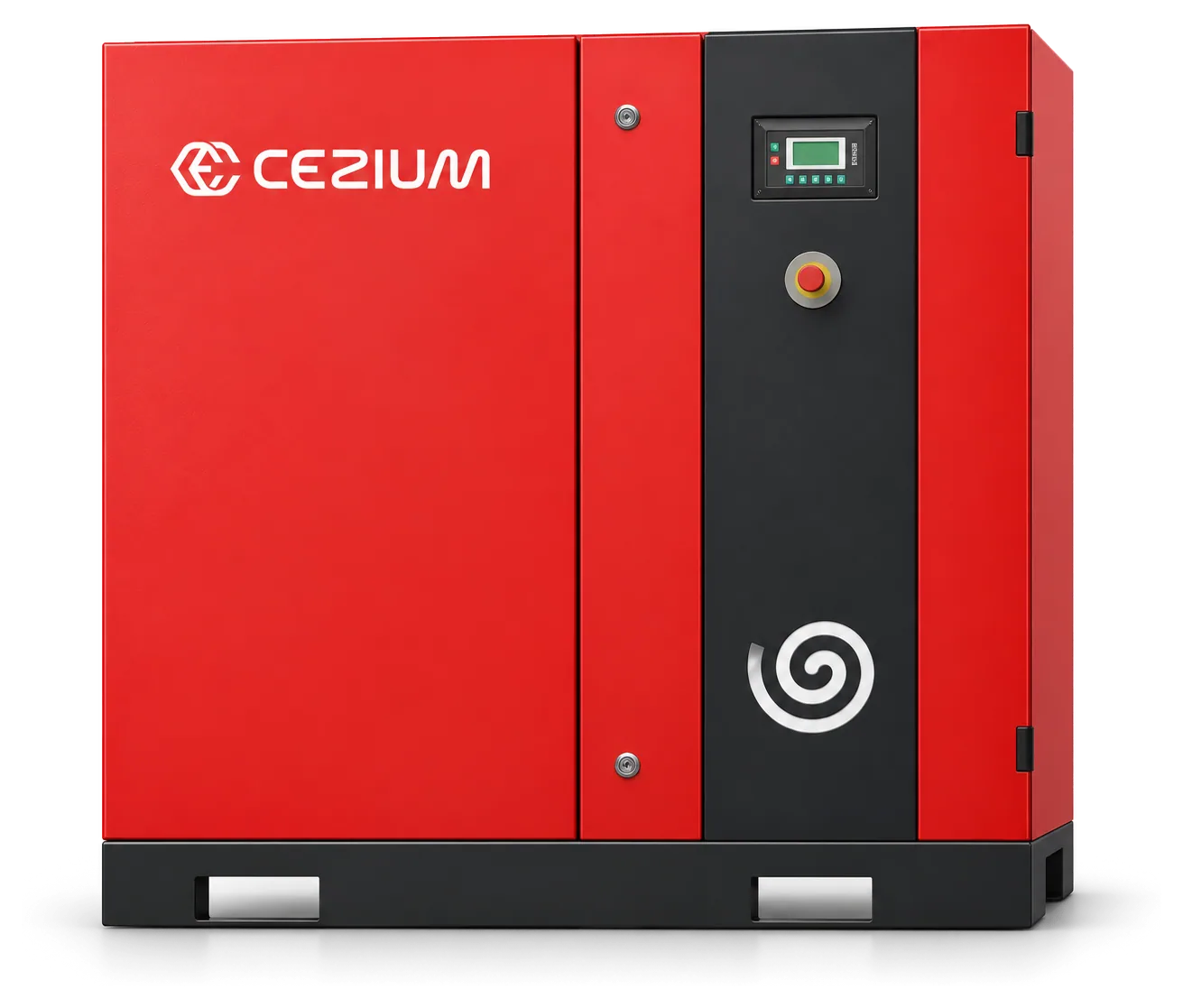
Oil-free scroll
2.2 to 45 kWOil-free by design, quiet, compact: the format for laboratories and small production lines, up to 5 m³/min.
13 catalogue models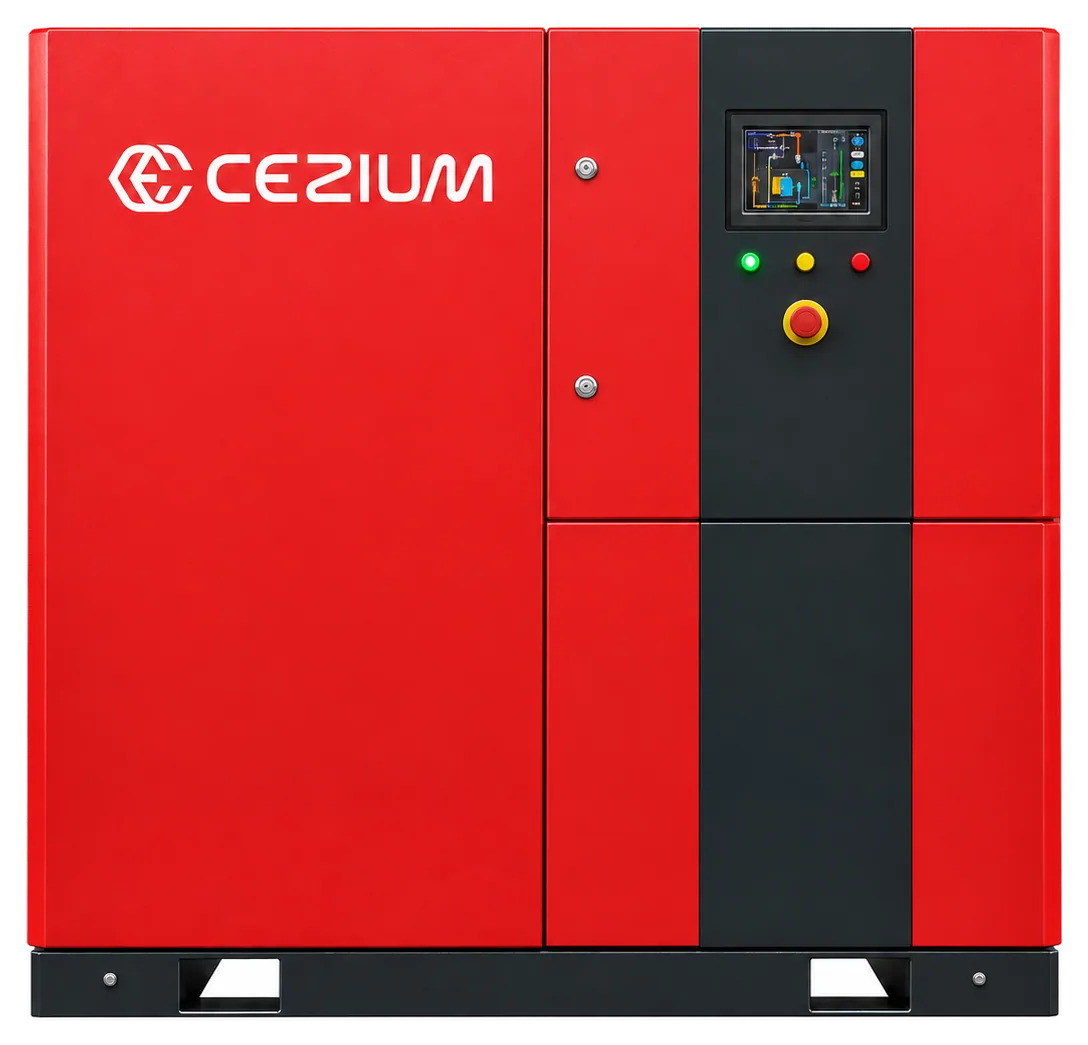
Oil-free rotary tooth
15 to 55 kWNon-contacting rotors and TÜV-certified Class 0, for production flows between 2.3 and 8.6 m³/min.
14 catalogue models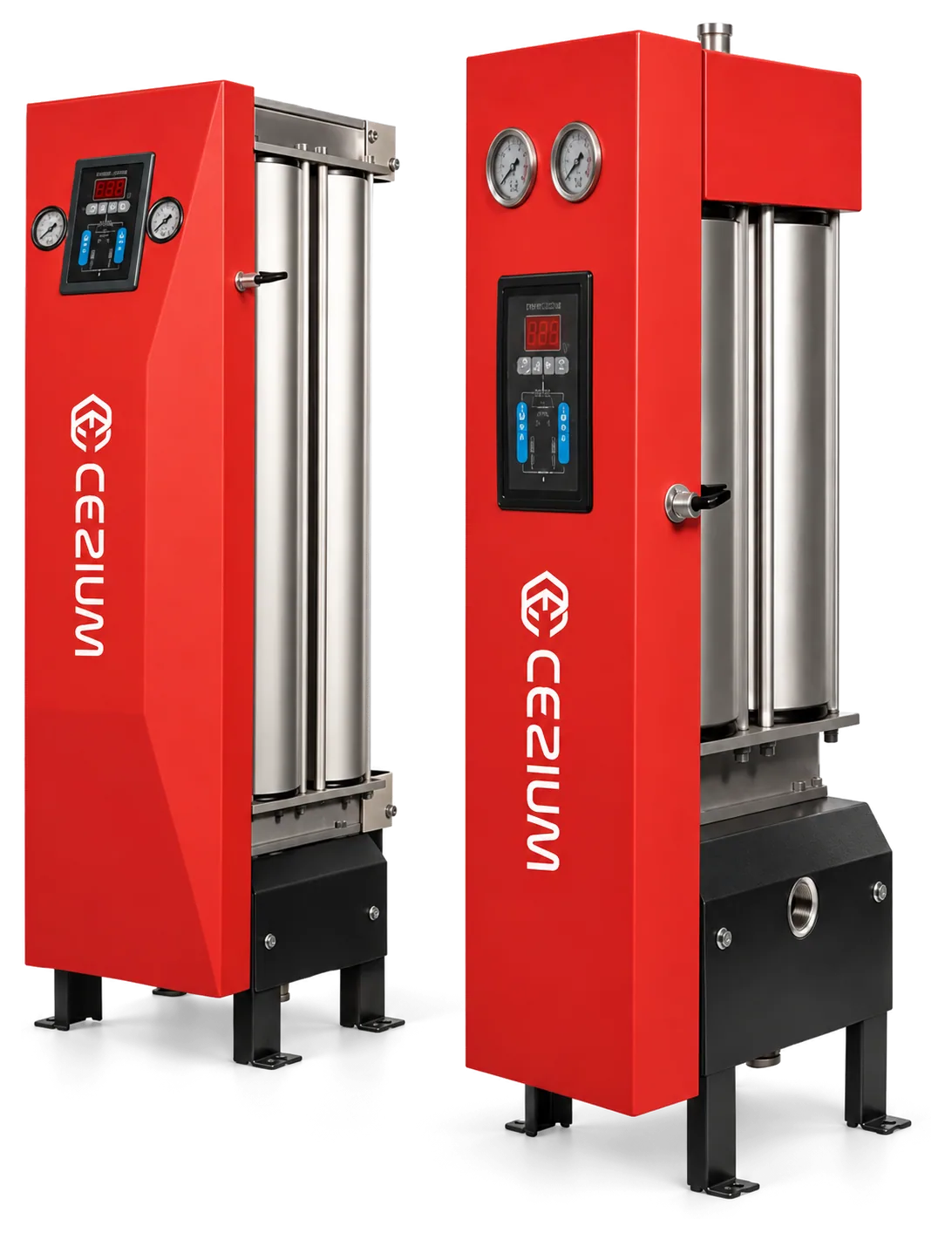
Heatless adsorption dryer
0.5 to 83 m³/minThe -40 °C dew point required wherever sterility or active-ingredient stability is at stake.
31 catalogue modelsApplicable standards.
Compliances are verified case by case according to the selected model and audit scope. Complete documentation provided with each machine.
The classes usually required
The classes below are the ones we meet most often in pharmaceutical plants. They carry no regulatory weight: your own specification, and it alone, sets the contractual target.
| Point of use | Particles | Water (dew point) | Oil |
|---|---|---|---|
| Air in direct contact with the product or primary packaging | Classe 1 | -40 °C (classe 2) | Classe 0 |
| Process air with no product contact | Classe 2 | -40 °C (classe 2) | Classe 1 |
| Service air and pneumatic tools in technical areas | Classe 2 | +3 °C (classe 4) | Classe 1 |
Our order of preference for Class 0
When a specification says Class 0, CEZIUM quotes an oil-free machine, as the trade understands it: scroll compressor up to 5 m³/min, rotary tooth compressor from 2.3 to 8.6 m³/min, dry screw or centrifugal beyond that. We also point out the alternative few suppliers mention: a lubricated screw followed by a treatment chain delivers oil-free air for a markedly lower purchase price, without carrying the Class 0 label.
In this trade, Class 0 means an oil-free machine. That is the convention, and it is what a specification expects when it writes Class 0, so that is what we quote. Technically, ISO 8573-1 classifies air at the point of use rather than the compressor, so a lubricated screw followed by multi-stage filtration and an adsorption dryer delivers oil-free air measured on acceptance. That is a genuine alternative, cheaper to buy and far better at heat recovery, but it does not give you a Class 0 certified machine. Both are worth knowing; your own documents decide.
| Rank | Technology | Catalogue flow | Power | Class 0 | Recoverable heat | Purchase cost |
|---|---|---|---|---|---|---|
| 01 | Scroll compressor | 0.3 to 4.96 m³/min | 2.2 to 45 kW | Oil-free machine | Low | Moderate |
| 02 | Rotary tooth compressor | 2.3 to 8.6 m³/min | 15 to 55 kW | Oil-free machine | Low | High |
| 03 | Dry screw compressor | 6.8 to 43 m³/min | 45 to 250 kW | Oil-free machine | Limited | Very high |
| 04 | Centrifugal compressor | 48 to 3,000 m³/min | 198 to 12,055 kW | Oil-free machine | High | Very high |
| 05 | Lubricated screw + treatment chain | 0.95 to 44 m³/min | 5.5 to 250 kW | Treated air, no label | High | Low |
Flow rates and power ratings taken from the CEZIUM catalogue, oil-free technologies and variable-speed lubricated screw. Purchase cost is given in relative ranks, at comparable flow.
- 01
Scroll compressor
Up to 5 m³/minThe first choice below 5 m³/min: oil-free by design, quiet, compact. The right format for a laboratory, a dental practice or a small production line.
See the 13 catalogue models - 02
Rotary tooth compressor
2.3 to 8.6 m³/minAbove the scroll range and up to 8.6 m³/min. The rotors never touch: no friction inside the chamber, minimal wear, TÜV-certified Class 0. Beyond that flow, several units run in parallel.
See the 14 catalogue models - 03
Dry screw compressor
7.8 to 46 m³/minThe answer at high flow when the specification says Class 0. We also state its downside: it costs a great deal to buy and lends itself poorly to heat recovery. If your documents ask for oil-free air rather than a certified machine, the previous step is worth quoting alongside.
See the 20 catalogue models - 04
Centrifugal compressor
From 48 m³/minReserved for the continuous base load of very large sites, where no screw compressor can carry the flow in a single machine.
See the 11 catalogue models - 05
Lubricated screw + treatment chain
Alternative, above 8.6 m³/minThe alternative, when your specification asks for oil-free air rather than a certified machine: multi-stage filtration and an adsorption dryer behind a lubricated screw, with acceptance measurement at the point of use. Markedly lower purchase price, and compression heat is recovered from the oil circuit, which a dry machine does poorly. Rule it out if your documents say Class 0.
See the 33 catalogue models
The questions we are asked
Does Class 0 require an oil-free compressor in pharma?
Which dew point should a sterile production area use?
What exactly does the CEZIUM warranty cover on a pharmaceutical installation?
Worth reading before deciding
ISO 8573-1: the complete guide to compressed air quality classes
ISO 8573-1 grades compressed air quality against three criteria, particles, water and oil, each on its own scale starting at Class 0. Which class suits which application? Full table and examples.
Lubricated screw or oil-free compressor: Class 0 describes the air, not the machine
Most comparisons set two machines against each other. The standard, however, judges the air at the point of use. A lubricated screw followed by a treatment chain can deliver oil-free air at the point of use, at a significantly lower purchase cost; class 0 itself remains that of an oil-free machine. Here is the order in which CEZIUM selects each technology.
Describe your process. We'll propose the right machine combination.
Reply from our technical team within 24 working hours. Free pre-study including sizing and budget estimate.