
Compressed air for textiles and plastics processing
Variable flow, optimized energy.
Textile (air-jet weaving, finishing) and plastics (bottle blowing, extrusion, injection) industries share a common trait: compressed air consumption varies strongly with machine cycles. A fixed-speed screw with no demand runs unloaded and still draws 15 to 35% of its power while producing nothing, according to the US Department of Energy Sourcebook: hence the value of permanent-magnet variable speed compressors.
What needs to be solved.
- 01Adapt air flow in real time to the variable demand of machines (weaving, injection or blowing cycles) to minimize partial-load losses.
- 02Eliminate the idle hours of a fixed-speed compressor, which still draws 15 to 35% of its power while producing nothing (US DOE Sourcebook), with a permanent-magnet variable speed drive.
- 03Recover compressor heat to preheat finishing baths, process water, or workshop ventilation air.
Our technical answer.
These processes share one trait: air demand swings sharply from minute to minute. A fixed-speed machine wastes energy there.
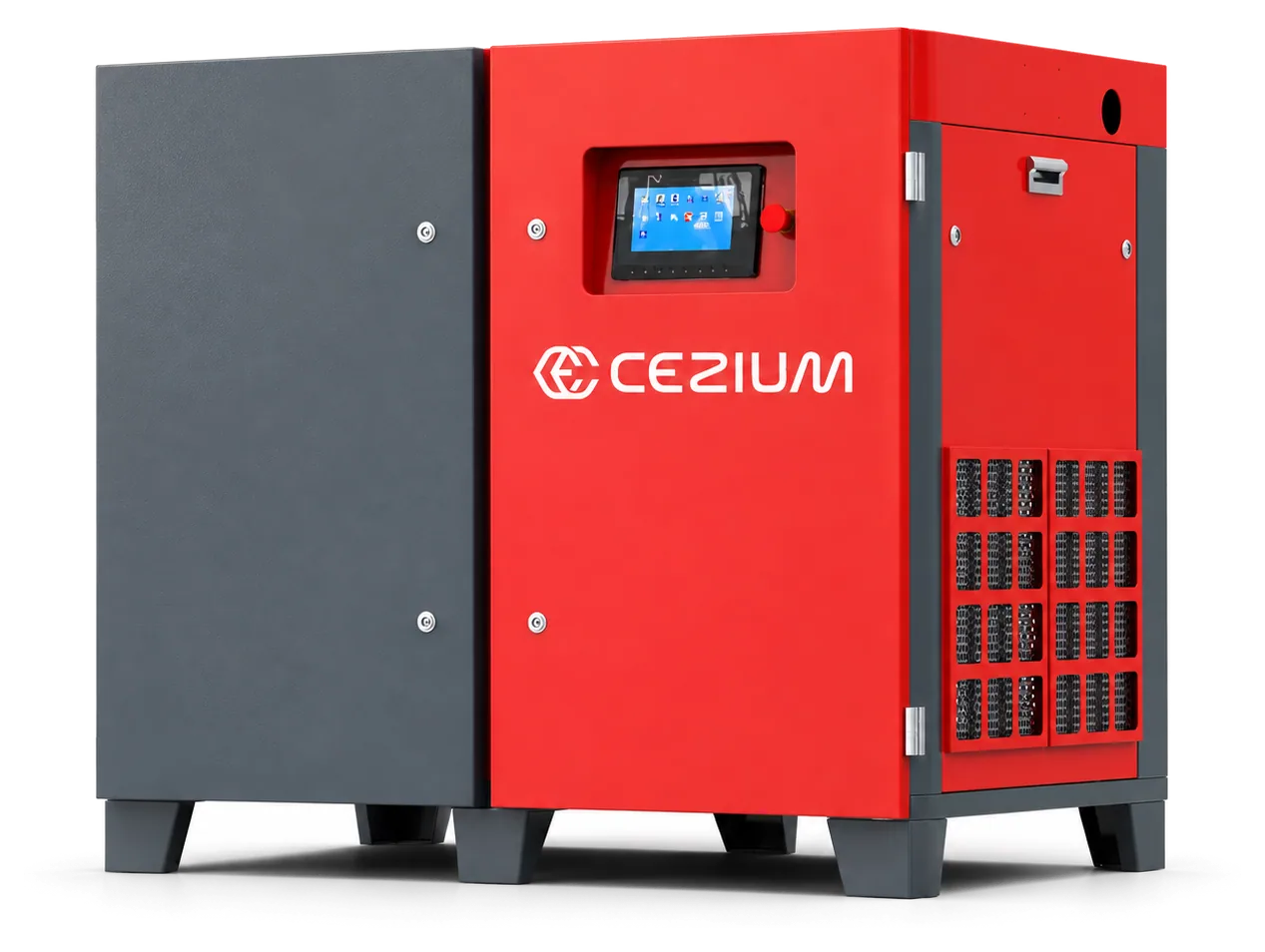
PM VSD screw
5.5 to 250 kWSpeed follows demand continuously: no more load and unload cycles, and pressure held within a narrow band.
33 catalogue models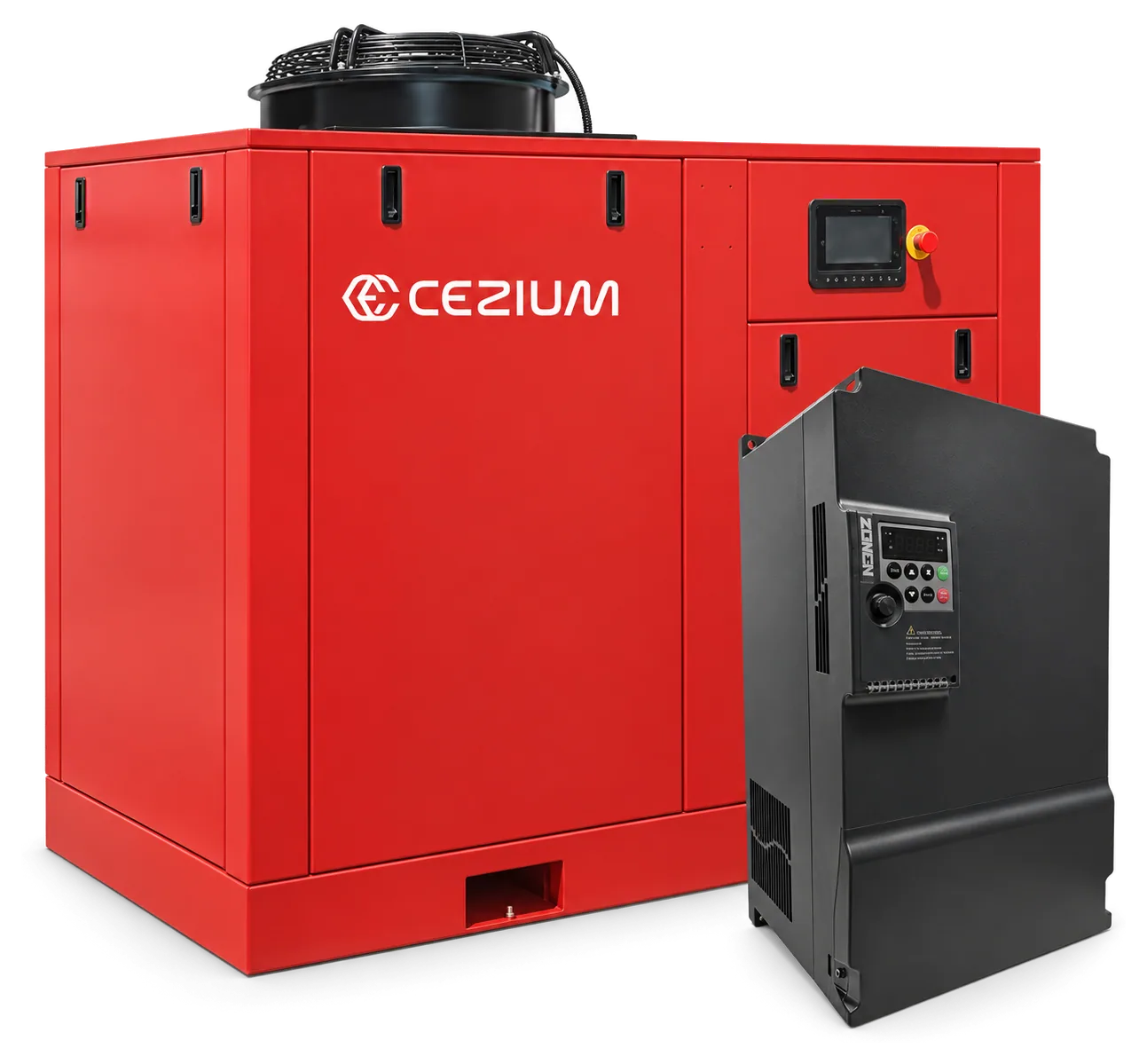
PM VSD rotary vane
7.5 to 45 kWFor smaller flows, the same variable-speed principle in a compact, quiet format.
8 catalogue models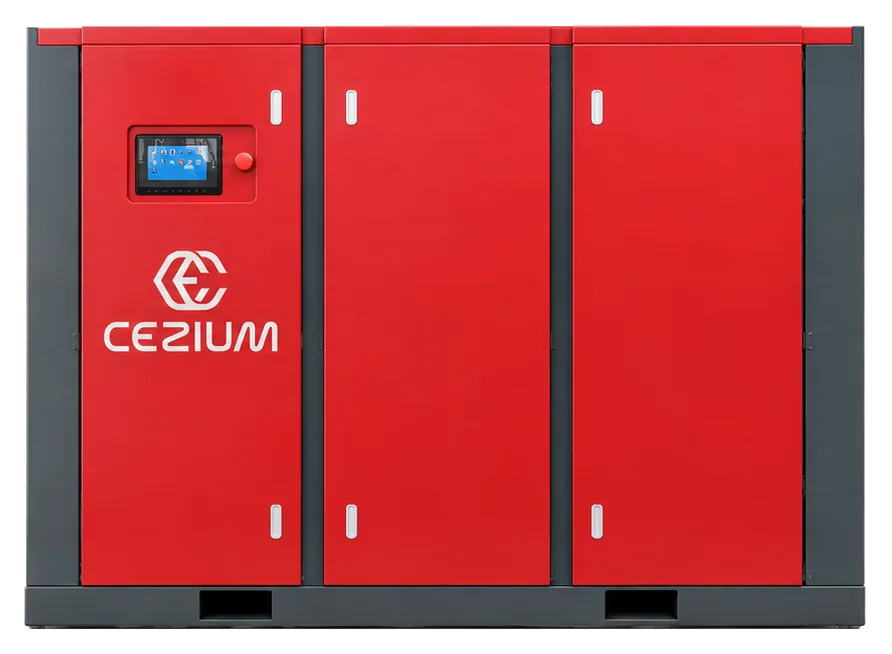
Two-stage screw
22 to 250 kWWhen part of the load is steady, carry it on a two-stage machine and let variable speed absorb the swings.
27 catalogue modelsApplicable standards.
Compliances are verified case by case according to the selected model and audit scope. Complete documentation provided with each machine.
The classes usually required
Textiles and plastics rarely demand the strictest classes, except on product contact. The priority lies elsewhere: energy.
| Point of use | Particles | Water (dew point) | Oil |
|---|---|---|---|
| Air-jet weaving and production machines | Classe 2 | +3 °C (classe 4) | Classe 1 |
| Injection, extrusion, automation | Classe 3 | +3 °C (classe 4) | Classe 2 |
| Blow moulding and tools | Classe 4 | +3 °C (classe 4) | Classe 3 |
The questions we are asked
Is a variable-speed machine always cheaper to run?
How do you measure that profile before choosing?
Can compressor heat serve finishing baths?
Worth reading before deciding
Permanent magnet VSD: what the drive really saves
What a permanent magnet drive changes on a varying load: idle hours removed, and the annual gain to be worked out from your own load profile, across 6 typical power ratings.
Compressor heat recovery: up to 84% of the electricity can be reused
A screw compressor converts electricity into compressed air… and into heat. That heat accounts for 80 to 93% of the energy consumed, and 50 to 90% of that heat can be recovered to heat a building or a process. Method and calculation.
Describe your process. We'll propose the right machine combination.
Reply from our technical team within 24 working hours. Free pre-study including sizing and budget estimate.