
Compressed air for the food and beverage industry
Safe food processing.
In food & beverage, compressed air comes into direct or indirect contact with products intended for human consumption: PET bottle blowing, pneumatic powder transport, modified-atmosphere packaging, drying. HACCP, ISO 22000 and FDA standards require zero oil and rigorous microbiological control.
What needs to be solved.
- 01Completely eliminate the risk of oil contamination in food-contact zones - ambient air as well as process air.
- 02Sustain high production rates (PET blowing, packaging) without disruption, despite cyclical consumption peaks.
- 03Recover the heat generated by compressors to warm process water, optimize CIP/SIP, and reduce the energy bill by 30 to 95 %.
Our technical answer.
Three families answer the three needs of a food plant: production air, high-pressure blowing and drying.
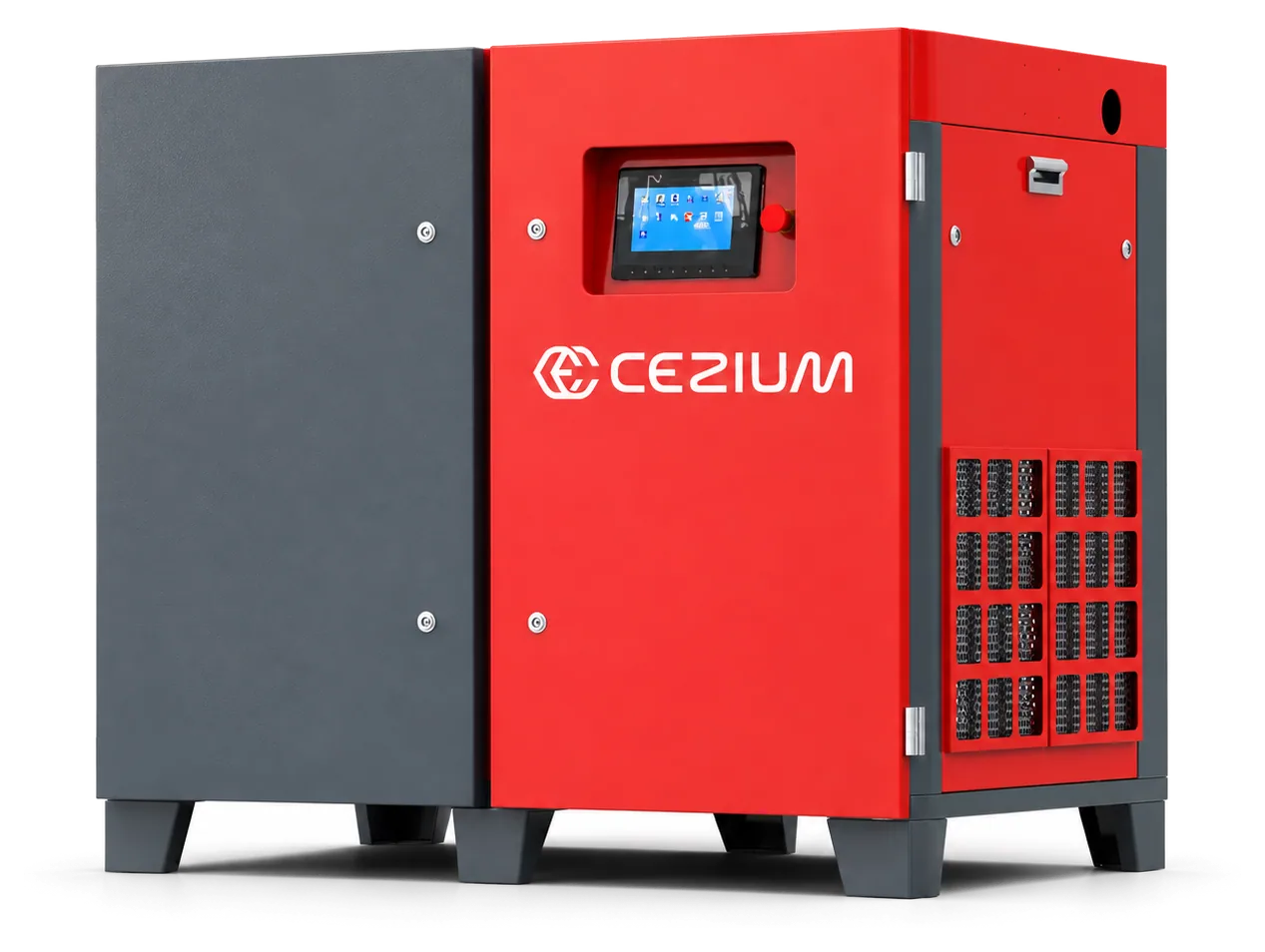
PM VSD screw
5.5 to 250 kWFlow that follows packaging cycles, and compression heat recovered from the oil circuit for process water and cleaning cycles.
33 catalogue models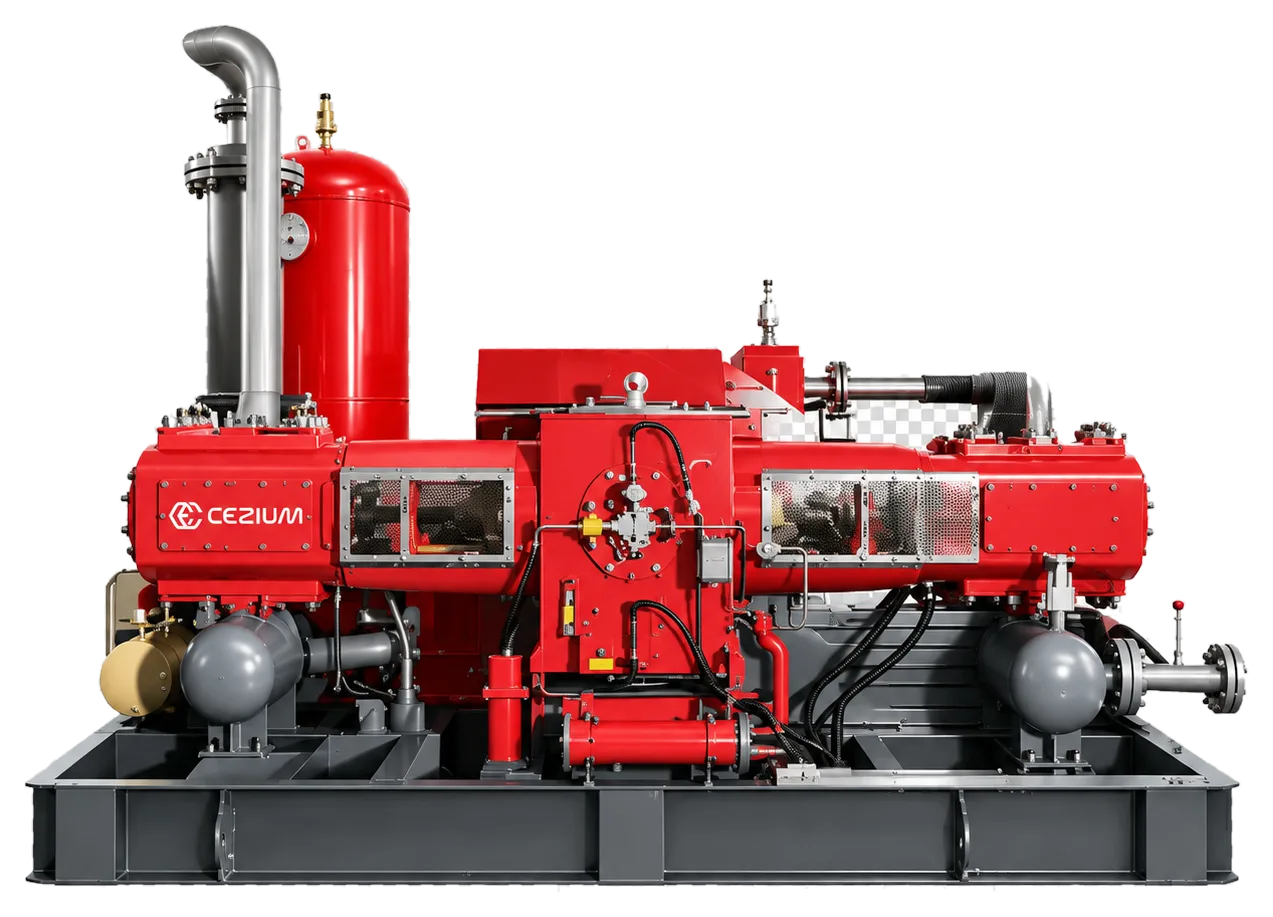
Oil-free booster
7.5 to 160 kWPET blowing needs a pressure far above the network: the booster lifts the workshop's 8 bar to the required level, oil-free.
22 catalogue models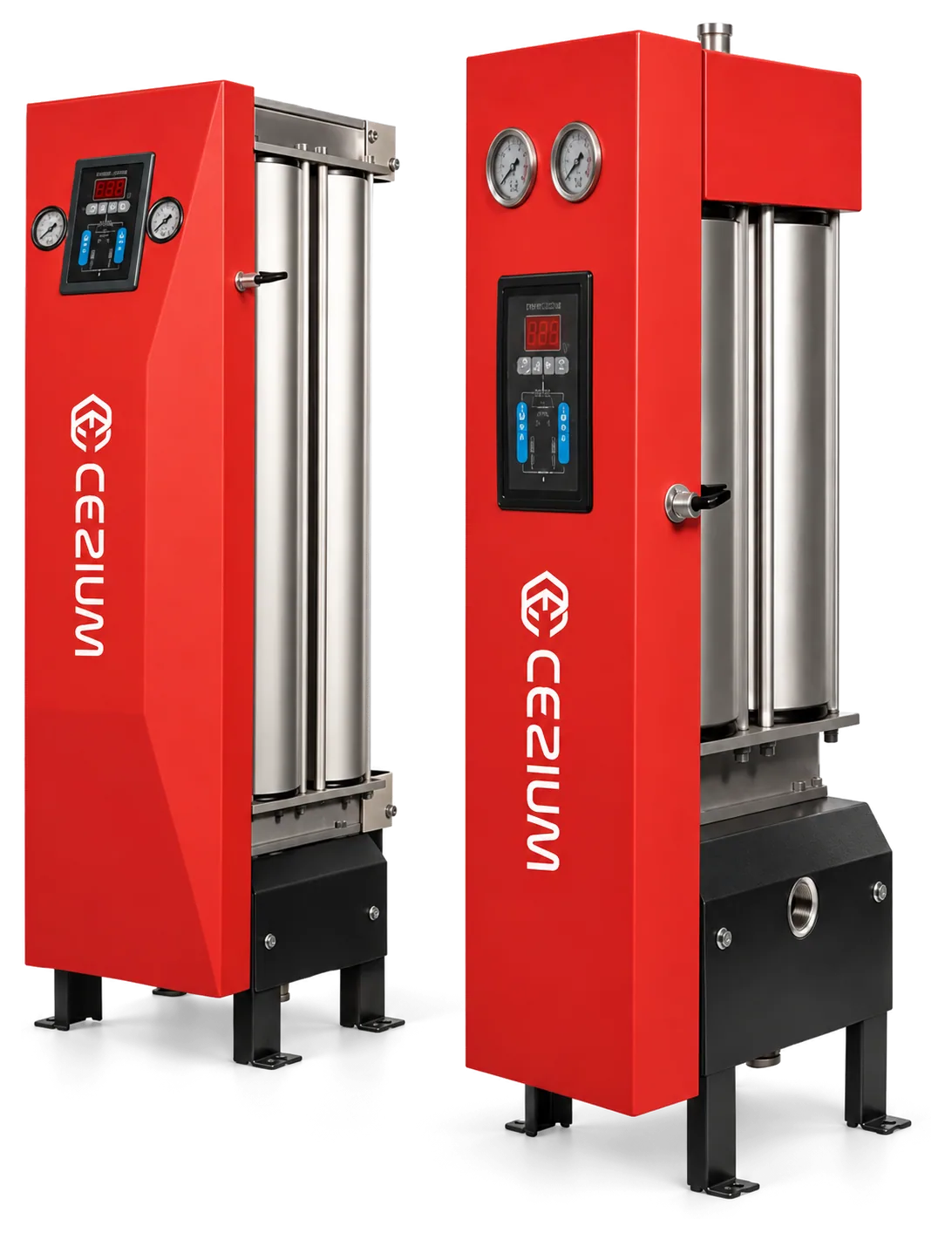
Heatless adsorption dryer
0.5 to 83 m³/minA -40 °C dew point wherever air touches the product or its packaging.
31 catalogue modelsApplicable standards.
Compliances are verified case by case according to the selected model and audit scope. Complete documentation provided with each machine.
The classes usually required
Product contact drives everything. These classes are the ones we meet most often; your HACCP plan and your certification set the exact target.
| Point of use | Particles | Water (dew point) | Oil |
|---|---|---|---|
| Air in direct contact with food or primary packaging | Classe 1 | -40 °C (classe 2) | Classe 0 |
| Process air with no contact, closed pneumatic conveying | Classe 2 | +3 °C (classe 4) | Classe 1 |
| Service air, tools and automation | Classe 3 | +3 °C (classe 4) | Classe 2 |
Our order of preference for Class 0
When a specification says Class 0, CEZIUM quotes an oil-free machine, as the trade understands it: scroll compressor up to 5 m³/min, rotary tooth compressor from 2.3 to 8.6 m³/min, dry screw or centrifugal beyond that. We also point out the alternative few suppliers mention: a lubricated screw followed by a treatment chain delivers oil-free air for a markedly lower purchase price, without carrying the Class 0 label.
In this trade, Class 0 means an oil-free machine. That is the convention, and it is what a specification expects when it writes Class 0, so that is what we quote. Technically, ISO 8573-1 classifies air at the point of use rather than the compressor, so a lubricated screw followed by multi-stage filtration and an adsorption dryer delivers oil-free air measured on acceptance. That is a genuine alternative, cheaper to buy and far better at heat recovery, but it does not give you a Class 0 certified machine. Both are worth knowing; your own documents decide.
| Rank | Technology | Catalogue flow | Power | Class 0 | Recoverable heat | Purchase cost |
|---|---|---|---|---|---|---|
| 01 | Scroll compressor | 0.3 to 4.96 m³/min | 2.2 to 45 kW | Oil-free machine | Low | Moderate |
| 02 | Rotary tooth compressor | 2.3 to 8.6 m³/min | 15 to 55 kW | Oil-free machine | Low | High |
| 03 | Dry screw compressor | 6.8 to 43 m³/min | 45 to 250 kW | Oil-free machine | Limited | Very high |
| 04 | Centrifugal compressor | 48 to 3,000 m³/min | 198 to 12,055 kW | Oil-free machine | High | Very high |
| 05 | Lubricated screw + treatment chain | 0.95 to 44 m³/min | 5.5 to 250 kW | Treated air, no label | High | Low |
Flow rates and power ratings taken from the CEZIUM catalogue, oil-free technologies and variable-speed lubricated screw. Purchase cost is given in relative ranks, at comparable flow.
- 01
Scroll compressor
Up to 5 m³/minThe first choice below 5 m³/min: oil-free by design, quiet, compact. The right format for a laboratory, a dental practice or a small production line.
See the 13 catalogue models - 02
Rotary tooth compressor
2.3 to 8.6 m³/minAbove the scroll range and up to 8.6 m³/min. The rotors never touch: no friction inside the chamber, minimal wear, TÜV-certified Class 0. Beyond that flow, several units run in parallel.
See the 14 catalogue models - 03
Dry screw compressor
7.8 to 46 m³/minThe answer at high flow when the specification says Class 0. We also state its downside: it costs a great deal to buy and lends itself poorly to heat recovery. If your documents ask for oil-free air rather than a certified machine, the previous step is worth quoting alongside.
See the 20 catalogue models - 04
Centrifugal compressor
From 48 m³/minReserved for the continuous base load of very large sites, where no screw compressor can carry the flow in a single machine.
See the 11 catalogue models - 05
Lubricated screw + treatment chain
Alternative, above 8.6 m³/minThe alternative, when your specification asks for oil-free air rather than a certified machine: multi-stage filtration and an adsorption dryer behind a lubricated screw, with acceptance measurement at the point of use. Markedly lower purchase price, and compression heat is recovered from the oil circuit, which a dry machine does poorly. Rule it out if your documents say Class 0.
See the 33 catalogue models
The questions we are asked
Must compressed air touching food be entirely oil-free?
How much of a compressor's energy can genuinely be used for heating?
Does PET blowing need a separate booster?
Worth reading before deciding
Compressor heat recovery: up to 84% of the electricity can be reused
A screw compressor converts electricity into compressed air… and into heat. That heat accounts for 80 to 93% of the energy consumed, and 50 to 90% of that heat can be recovered to heat a building or a process. Method and calculation.
Lubricated screw or oil-free compressor: Class 0 describes the air, not the machine
Most comparisons set two machines against each other. The standard, however, judges the air at the point of use. A lubricated screw followed by a treatment chain can deliver oil-free air at the point of use, at a significantly lower purchase cost; class 0 itself remains that of an oil-free machine. Here is the order in which CEZIUM selects each technology.
Describe your process. We'll propose the right machine combination.
Reply from our technical team within 24 working hours. Free pre-study including sizing and budget estimate.